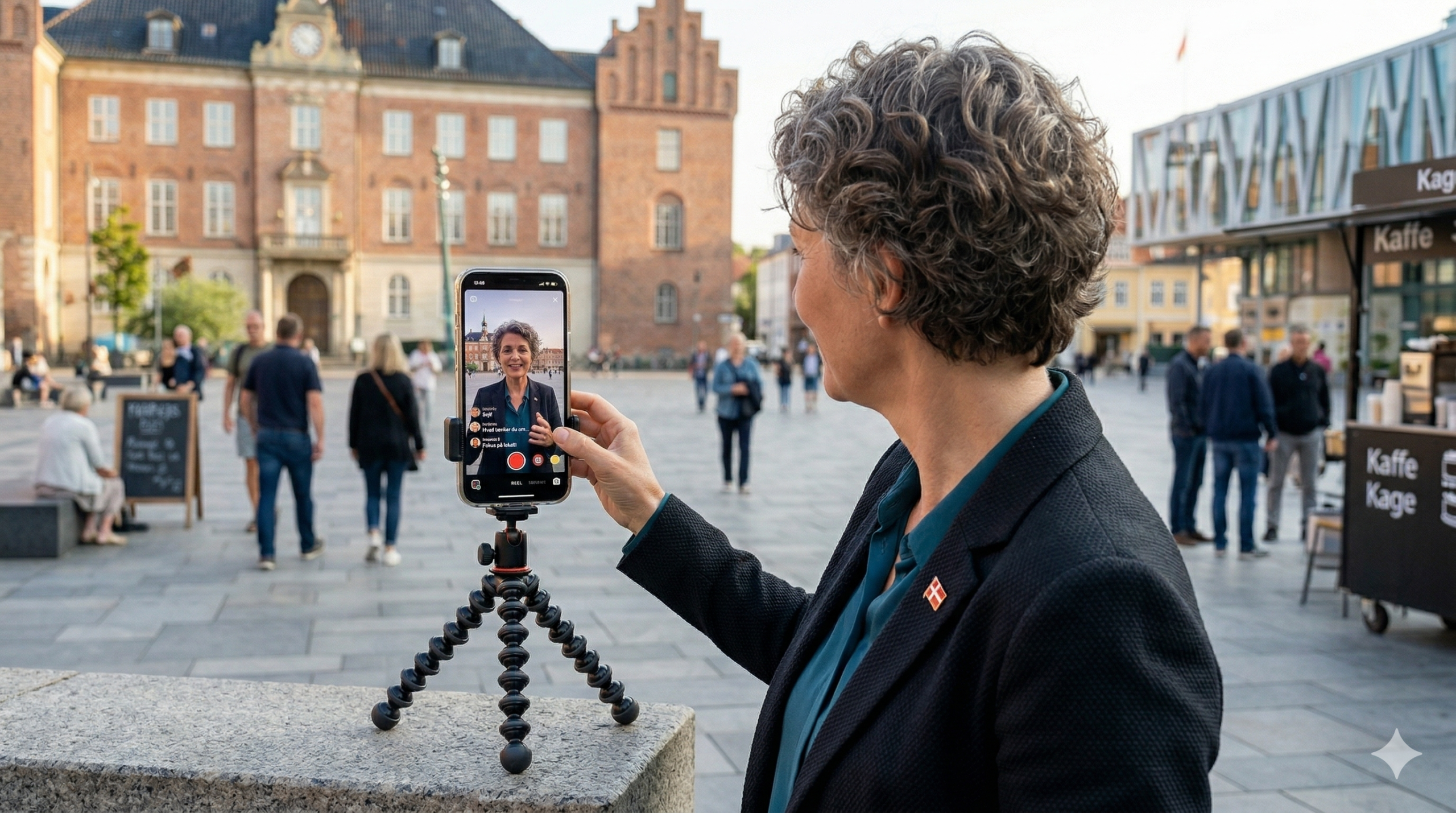

Imagine suddenly being banned from running ads on Facebook, Instagram, LinkedIn, TikTok, and Google. What would you do? This is exactly the reality political parties in Denmark have had to navigate during the current election campaign.
In October 2025, a new EU regulation came into force, regulating the digital advertising of political messages (EU Regulation 2024/900 on the transparency and targeting of political advertising).
The new EU rules require every political advertisement to be accompanied by a “transparency notice.” This must include very specific information, such as:
- Exactly who paid for the ad (the sponsor).
- The precise amount spent.
- Which specific targeting techniques and datasets were used to reach you.
Furthermore, the rules place heavy restrictions on using sensitive personal data for political targeting. It is now forbidden to target political ads based on, for example, religion, sexual orientation, or political beliefs, unless the user has given specific and separate consent for that exact purpose.
Tech Giants Opt Out of Digital Ads
For Google, Meta (Facebook/Instagram), LinkedIn, and TikTok, the legal responsibility and technical complexity became too high. Instead of building complicated systems to comply with the many new requirements and risking massive fines (up to 6% of their global turnover), they chose to stop accepting political ads in EU countries altogether.
Parties and candidates can no longer “boost” posts or buy Search ads on Google.
Politicians can still post videos and text on their profiles for free, but they cannot pay to reach people who do not already follow them.
A Boost for Danish Online Newspapers
The shutdown by the tech giants has served as a strengthened revenue source for Danish online newspapers. As campaign budgets suddenly had to be redistributed, the newspapers’ own ecosystems became the obvious choice. Their proprietary ad formats (such as “topscroll” and “midscroll”) have seen massive growth.
The newspapers typically solve the new legal requirements with a visual overlay on the ad containing the necessary documentation.
A Serious Problem for Small Parties and Democracy
While it is sometimes fascinating (and educational) to watch politicians express themselves organically, the ad ban leaves us with a serious democratic problem.
When cheap, targeted digital ads are removed, it is often only the large, well-funded parties that can afford the massive, nationwide newspaper ads which have suddenly become the only paid alternative. Small parties and new voices find it incredibly difficult to spread their messages when deprived of the most cost-effective tools.
The rules affect not only political parties but also NGOs and interest groups if they advertise on topics that could influence an election or a legislative process (e.g., climate, abortion, or taxes). It is potentially damaging to democracy when the ability to be heard depends on having the budget for expensive full-page ads in major broadsheets.
Inspiration for Your Business from the Election
When you remove the ability to buy reach, you are forced to think creatively. And that is exactly what we have seen the politicians do. Whether you run a small local trade business, a specialty shop, or a sports club on a tight budget, there is plenty of inspiration to be found in the politicians’ new organic strategies.
Here are the key methods used by the parties to break through the noise, and how you can replicate their success:
1. Reels are the New Election Posters
Without paid ads, parties have moved massively toward short-form video content like Instagram Reels and TikTok. While a post with text and an image often dies quickly in the algorithm, Reels have the potential to go viral and reach far beyond one’s own followers. It’s about quick messages, humor, and catching the viewer within the first two seconds.
Your takeaway:
You don’t need an expensive video crew. Use your smartphone. Show daily life in your company, make a quick “how-to” video from the workshop, or present this week’s offer in 15 seconds with a wink.
2. Events as the Ultimate Content Engine
We have seen a resurgence of physical events. Concepts like “Alex uden filter” (featuring Alex Vanopslagh, leader of the classical liberal party Liberal Alliance), joint town halls with “Alex and Inger” (Inger Støjberg, leader of the right-wing Denmark Democrats), and Morten Messerschmidt’s (leader of the national-conservative Danish People’s Party) national tour are not just old-fashioned voter meetings. They are strategic content engines. When they gather people physically, they create numerous situations that can be filmed, edited, and shared on social media afterward.
Your takeaway:
Create local events. Invite customers to an evening session, host a mini-course, or hold an “ask the expert” night. Record the best moments on your phone and share them on your channels. Physical presence builds digital loyalty.
3. Personal Branding and “The Edge”
When a message cannot be pushed out with ad spend, the sender must be made more interesting. A clear example is former Prime Minister Lars Løkke Rasmussen (leader of the centrist party The Moderates), who has noticeably changed his clothing style and brought back his iconic pipe. It creates an “edge,” recognition, and authenticity. It gives people something to talk about that goes beyond policy.
Your takeaway:
Don’t be afraid to show personality. Small businesses have a huge advantage over large, faceless corporations: they have you. Show who you are, share your opinions on your craft, and let your passion shine through. Relationships create local sales.
4. Guest Appearances in Podcasts and Alternative Media
Without Google Ads to catch searching voters, politicians have started seeking out places where listeners already are. They appear in everything from advice podcasts to entertainment shows to borrow the reach of established hosts.
Your takeaway:
Find strong local partners. Can your business do a joint post with the shop next door? Can you write a guest post for a local community Facebook page? Borrowing someone else’s audience is an effective and free shortcut to visibility.
5. Interactive Tools: Gamify Your Message
One of the most overlooked but extremely effective moves in this election has been the use of interactive tests. A strong example is valgtesten.dk (“The Election Test”).
The site was launched by a right-leaning online news outlet founded by Mitchel Oliver, a former social media assistant and communications consultant for the Danish People’s Party. This election test uses biased questions, that seemed designed to lead users toward the core issues of the Danish People’s Party.
Setting aside the morality of this specific example, it is effective because it creates high engagement. When we input data ourselves and receive a result, we remember the message much better. Simultaneously, it bypasses the need for ads because people naturally share their test results with friends and family.
Your takeaway:
You don’t need to build a massive portal, but you can use the principle. Interactive elements like calculators or simple quizzes are gold for a small business. It gives the customer immediate value.
- The Tradesman: Create a “Roof Calculator” where customers can enter their square footage and get a ballpark estimate in 30 seconds.
- The Gym: Create a “Which class fits your temperament?” test.
- The Specialty Shop: Create a “Find the Perfect Gift” guide based on 3 questions.
When you help your customers find answers to their specific needs through a test or calculator, you quickly build authority and trust.
Constraints Breed Creativity
Behavioral psychologist Patricia Stokes described in her book “Creativity from Constraints: The Psychology of Breakthrough” that total freedom often leads to paralysis or the repetition of what we already know. Constraints, on the other hand, force the brain to seek new paths and innovate. The 2026 election campaign has been a prime example of this.
It proves that there is potential for businesses and organizations that see the opportunity within the limitations—just as the politicians have done.