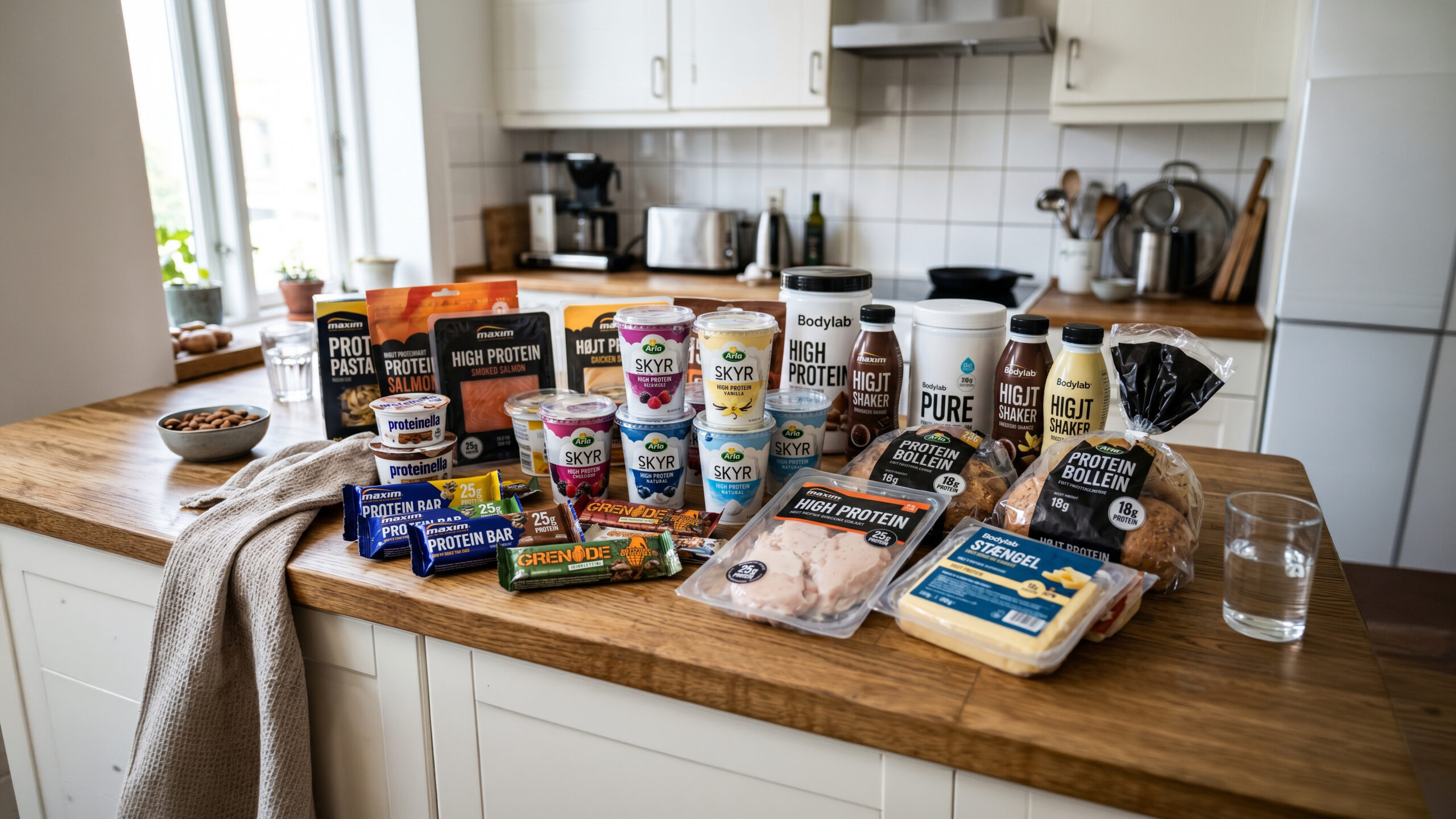

You cannot open a grocery flyer or scroll through social media for three seconds without being hit by “High Protein” labels. Breakfast cereals, chocolate pudding, chips, ice cream, pancakes—you name it, it’s got protein sprinkled on top, and the price tag has doubled in the process. Welcome to the phenomenon known as “proteinification.”
The actual health value is highly debatable. According to health authorities, very few of us actually need extra protein unless we are actively trying to bulk up at the gym. A classic slice of whole-grain rye bread covers the need perfectly. It just doesn’t sound nearly as sexy as a High Protein Chocolate Pudding.
But through a marketing lens, the “proteinification” trend is one of the most educational shifts in modern retail. The manufacturers didn’t invent a brand-new product. They simply changed how we perceive an existing one—and got us to pay double for it.
You can learn from this exact trick. And no, it’s not about deceiving anyone; it’s about communicating the value you already deliver so that it actually gets noticed.
The Anatomy of the Protein Trick
The recipe is remarkably simple: You take an ordinary, often highly processed product. You remove a bit of sugar, add a pinch of whey protein, and slap “HIGH PROTEIN” in bold letters across the front. The rest of the ingredient list remains virtually unchanged—but the price certainly does not.
Why does it work so well? Because the trick triggers three well-documented psychological mechanisms.
1. Perceived Value – Value is a Feeling, Not a Math Equation
In marketing, we distinguish between actual value (what it costs to produce the item) and perceived value (what the customer feels it is worth to them). It is almost always the latter that triggers the purchase.
The protein pudding might cost the manufacturer 5 cents more to produce than the regular version. However, the perceived value skyrockets because the product now feeds into the customer’s self-image as someone who makes healthy choices.
The customer isn’t buying protein; they are buying an identity and peace of mind. You aren’t competing on what your product is. You are competing on what the customer believes and feels it does for them.
2. Framing – Same Content, New Packaging
The framing effect (made famous by Kahneman and Tversky’s research in behavioral economics) shows that the way information is presented fundamentally changes how we evaluate it—even when the underlying data is identical. “90% fat-free” sells significantly better than “10% fat.”
The “High Protein” label is pure framing. It shifts the customer’s focus away from what the product still is (a sugary dessert) and shines a spotlight on the one attribute that matches the current cultural zeitgeist.
Take a close look at your own framing: What feature are you highlighting today, and is it actually the one your target audience cares about right now?
3. Price-Quality Heuristic – Price is a Signal
The higher price tag isn’t just a byproduct of the trick; it is an active part of it. Our brains are inherently lazy, so we use price as a shortcut to judge quality. When the protein pudding costs twice as much, our subconscious assumes it must be something special.
If you consistently try to be the cheapest in your market while simultaneously claiming you offer the highest quality, your two most important signals are pulling in opposite directions.
How to Find Your Own “Protein”
You don’t need a massive corporate budget or a brand-new product line to pull this off. You just need to work systematically with your communication. Here is a 4-step guide to doing just that:
Step 1: Map Your Hidden Added Value
Make a list of everything you do that you take for granted, but that your customers truly value. If you aren’t sure, reach out to your last five customers and ask: “Why did you choose us, and what surprised you positively?”
Here are a few examples of hidden value that rarely makes it into local marketing:
- The Carpenter:
Do you always finish on time and leave the workspace spotless? You aren’t selling “a new roof”—you are selling peace of mind and a time guarantee. - The Local Café:
Is your coffee organic and roasted locally? Don’t just write “Coffee: €4.50” on the menu board. Tell the story of craftsmanship and local roots. - The Community Sports Club:
Are you selling a membership fee, or are you selling local community spirit and valuable screen-free time for children?
Step 2: Identify What Your Audience Cares About Right Now
Protein works because health and fitness are driving the current cultural conversation. But your local audience has its own agenda. Is it sustainability? Time-saving? Budget security in a tough economy? A desire to support local independent businesses?
To figure this out, scroll through the comment sections of local Facebook groups, note the questions customers ask you repeatedly, and pay attention to the exact words your best customers use when they recommend you to others.
Step 3: Match Value with the Agenda and Rewrite Your Messages
Now, connect Step 1 and Step 2. Which of your hidden strengths speaks directly to what is currently top-of-mind for your audience? That is your protein. Sprinkle it generously on top of all your communication—your website, signage, quotes, and social media posts.
Concretely, this means shifting your messaging from features to benefits:
- Instead of “We do roofing work” try “A new roof with zero surprises. Fixed price and fixed deadline—or we pay the difference”.
- Instead of “Freshly baked bread every day” try “Baked fresh last night, using flour from the mill just 10 miles down the road”
Step 4: Test, Measure, and Adjust
Perceived value isn’t a set-it-and-forget-it exercise. Try testing two different headlines or social media posts to see which one gets more engagement. The ultimate sign that your new positioning has landed is when local customers start using your exact words when recommending you to their friends.
The Difference Between Framing and Faking
There is a razor-thin line between highlighting a genuine attribute and creating a misleading impression. The protein pudding balances right on this edge. The protein content is real, and manufacturers rarely make explicit, illegal health claims on the packaging… but they design it so cleverly that your brain fills in the blanks and thinks, “This must be healthy!”
Your “protein” must be able to withstand a closer inspection. If you promise a time guarantee but show up late, or if your “local” coffee actually comes from a mass-wholesaler overseas, you haven’t increased your perceived value. You have just taken out a loan on your own credibility—with an interest rate you can’t afford to pay.
Make the Invisible Visible
You don’t need to invent expensive new services to stand out in your local area. The most vital takeaway from the High Protein wave is that value is largely created through communication. Most small businesses, clubs, and associations already deliver far more value than they ever tell the world about.
Find your protein. Sprinkle it on top. Just make sure it’s the real deal.
FAQ: Frequently Asked Questions About “Perceived Value”
Perceived value is the customer’s personal evaluation of what a product or service is worth to them. It isn’t tied to production costs, but rather to how effectively the product solves a problem or fulfills a desire (like the desire to feel healthy). Perceived value is the ultimate driver behind a customer’s willingness to pay.
By systematically highlighting the benefits customers receive rather than just describing the features of the product. Focus on outcomes like peace of mind, time savings, local community support, or exceptional service. Start by asking your current customers why they chose you, and build your messaging around those insights.
The framing effect is a psychological phenomenon where the way information is presented influences how we evaluate it, even if the facts remain identical. For example, “90% fat-free” is perceived much more positively than “10% fat.” In practice, this means you can often boost your perceived value simply by rewording your core messages.
No, usually you don’t. Instead, look at how your existing services already align with current trends. If sustainability is important to your local audience, share the story of how you sort waste, reuse materials, or source products locally. That is framing something you are already doing.
The line is drawn at whether your claim holds up to scrutiny. If you are highlighting a genuine attribute of your business, it is smart marketing. If you are creating an impression that your product or service cannot fulfill, it is misleading—and that will cost you your reputation and your customers in the long run.